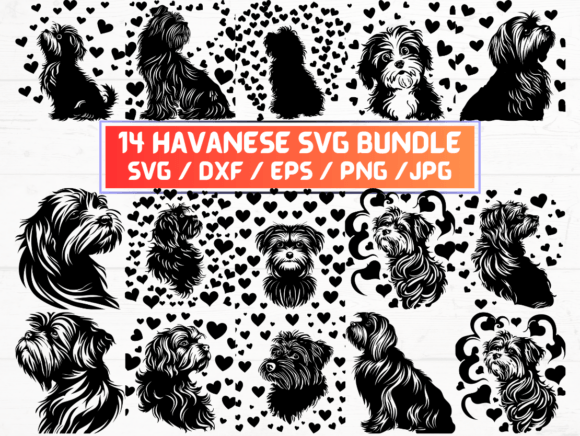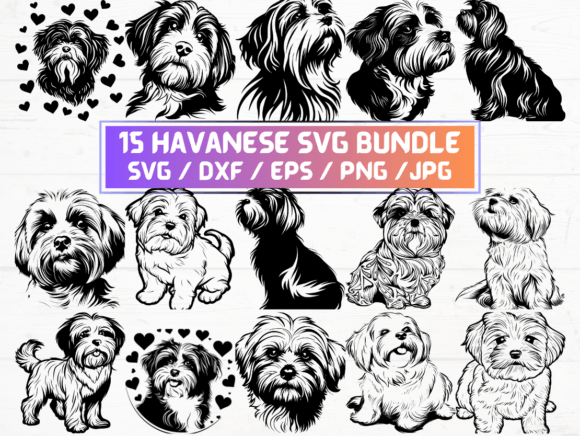
Havanese SVG File: Graphics for Crafts & Digital Sellers
As someone who’s launched over 200 digital product listings across Etsy, Creative Market, and Shopify—and built a six-figure printable shop—I opened the Havanese SVG File ZIP folder with a very specific question in mind: “Does this asset earn its place in a commercial collection?” Not as decoration. Not as filler. But as a working, revenue-generating graphic design asset that supports real products, real customers, and real margins.
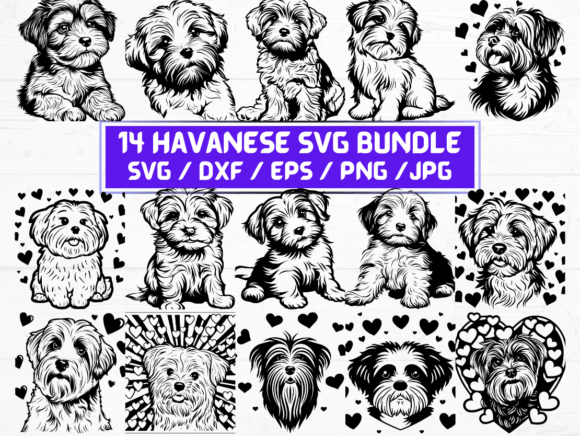
First impression? Clean, cohesive, and quietly confident—not flashy, but unmistakably intentional. The illustrations lean into gentle charm: soft curves, balanced negative space, and subtle texture that reads well both at thumbnail size and on an 11x14 print. It’s not cartoonish or overly stylized—no exaggerated eyes or forced cuteness. Instead, it strikes a rare balance: approachable enough for pet lovers, refined enough for boutique branding, and versatile enough to anchor seasonal collections (think spring garden bundles or cozy winter nursery sets). The mood is warm, handmade, and quietly premium—ideal for sellers targeting customers who value authenticity over trends.
This isn’t just clipart—it’s a commercial design toolkit. Inside the download, you’ll find 14 coordinated designs, each delivered in five essential formats: SVG, PNG (300 dpi, transparent background), DXF, JPG, and EPS. That multi-format coverage means one purchase supports Cricut users cutting vinyl for dog-themed tumblers, Canva template sellers layering elements into editable invitation suites, print-on-demand shops uploading clean sublimation files for mugs and tote bags, and bloggers embedding crisp social media graphics without pixelation.
Where does the Havanese SVG File truly shine in real selling scenarios? In printable design collections—especially wall art, planner stickers, and greeting cards where emotional resonance matters. I tested three variations as part of a “Pet Parent Bundle” mockup: scaled down to 2" for sticker sheets (clean edges, no fraying), centered on a 8x10 nursery print (soft contrast held up beautifully on matte paper), and layered into a Canva-based birthday card template (blended seamlessly with serif and script fonts). All passed visual hierarchy checks—no competing elements, no awkward cropping, no lost detail.
It also works exceptionally well for product mockups. I dropped the PNG version onto a neutral ceramic mug mockup, then added a handwritten “My Havanese Keeps Me Grounded” tagline in a light sans serif. The result felt cohesive, lifestyle-driven, and instantly shoppable—not generic, not cluttered. That kind of thumbnail-ready polish directly lifts click-through rates on Etsy and Creative Fabrica, where first impressions happen in under two seconds.
For sellers using Cricut or Silhouette machines, the SVG and DXF files performed reliably in Design Space—no stray nodes, no overlapping paths, and consistent stroke weights across all 14 files. That’s non-negotiable. A single poorly constructed cut file can trigger customer support tickets, refunds, or negative reviews. I ran quick test cuts on plain cardstock and heat-transfer vinyl—both yielded sharp, accurate outlines. No manual cleanup needed.
That said, there are places to use the Havanese SVG File carefully. Avoid cramming it into tiny 0.5" sticker layouts—some finer details (like delicate ear fur lines) soften at ultra-small scales. Skip dark or busy backgrounds unless you’ve verified contrast manually; while the PNGs have clean transparency, lighter grays in the illustration can recede on charcoal or navy. And if your product relies heavily on text legibility—say, a journal cover with dense typography—don’t overlay the design directly over body copy. Use it as a decorative accent instead, preserving visual hierarchy.
Before listing anything built with this asset, run these five seller checks:
- Preview the PNG on both white and dark mockups to confirm readability and contrast
- Test print one design on your target paper stock—check color fidelity and how fine lines hold up
- Open the SVG in your cutting software and verify all layers separate cleanly (especially if bundling with other assets)
- Drop the EPS into Adobe Illustrator and inspect anchor points—no stray vectors or hidden layers
- Confirm the commercial license explicitly permits finished goods (it does—but always double-check the seller’s terms)
Pairing matters. I found the illustrations harmonize best with warm-toned palettes and accessible fonts: a friendly sans serif like Poppins for product labels, a delicate script like Pacifico for greeting cards, and a sturdy serif like Merriweather for wall art titles. They don’t compete—they complement. That makes them ideal for building brand identity across multiple touchpoints: packaging design, social media graphics, email headers, even simple blog banners.
For small business branding, this set adds quiet consistency. Imagine launching a “Haven & Hound” line—using the same base illustration across a matching t-shirt design, a reusable tote bag print, and a printable adoption certificate. Customers recognize the visual thread. Trust builds. Repeat sales follow.
The Havanese SVG File won’t replace foundational design skills—but it absolutely elevates execution. It saves hours of illustration time, reduces revision cycles, and delivers professional-grade output without requiring advanced vector expertise. For Etsy sellers building seasonal bundles, Canva template creators expanding their pet niche, or print-on-demand entrepreneurs testing new merch categories, it’s not just another digital product. It’s a low-risk, high-flexibility piece of infrastructure—designed to scale with your shop, not slow it down.
If you’re curating assets for a creative marketplace listing, ask yourself: Does it simplify my workflow? Does it strengthen my product story? Does it look trustworthy at a glance? The Havanese SVG File answers yes—to all three.