6 Husky SVG: A Designer’s Real-World Embroidery Review
As a designer who’s stitched hundreds of custom pieces—from boutique baby onesies to Etsy best-selling tote bags—I opened the 6 Husky SVG folder with quiet curiosity. Not hype, not hope—just intent. I’d just landed a small-batch order for husky-themed kitchen towels and nursery pillows for a local shop, and this pack was on my shortlist. Here’s what I found—not as a marketer, but as someone who’s watched a beautiful digital file become a puckered, thread-broken disaster on stretchy cotton.
First Impression: Friendly, Folk-Art Charm—Not Overly Fussy
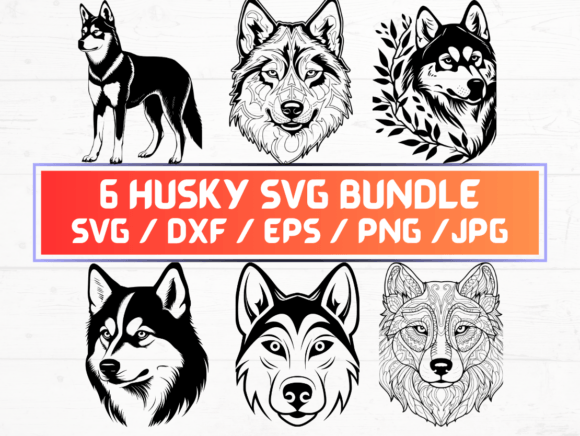
The six designs share a cohesive hand-drawn sensibility: rounded muzzles, expressive eyes, and soft, slightly asymmetrical outlines. None feel overly technical or vector-perfect—which is actually a strength for embroidery. These aren’t clipart; they’re embroidery-ready in spirit. The line weights vary thoughtfully: thicker strokes hold up well in satin stitch, while finer details (like ear fur texture or paw pads) suggest subtle running-stitch accents rather than dense fill areas. That tells me the creator understood stitch behavior—not just screen rendering.
Real Project Test: Stitching One on a Linen-Cotton Tea Towel
I chose the medium-sized husky facing left (File #3) for my tea towel test. Hoop size? 4” x 4”—tight but doable. I used medium-weight cutaway stabilizer and 40-weight polyester thread. Result? Clean entry, no floating stitches, and zero distortion—even on the towel’s open weave. The design’s modest detail level meant minimal thread trims and no nesting issues around the chest curve. Customers won’t see “vector art” here—they’ll see a warm, handmade quality that reads as intentional, not automated.
This matters because 6 Husky SVG isn’t just graphics—it’s functional embroidery file material. The shapes avoid sharp interior corners and micro-loops that snag needles. No tiny isolated islands (like individual whiskers) that vanish under dense stitching. That’s rare in craft-focused SVG packs—and it’s why this works so well for sweatshirt embroidery, embroidered patch blanks, and baby embroidery where simplicity equals durability.
Where It Shines (and Where to Pause)
- Custom apparel: Works beautifully on crewneck sweatshirts and relaxed-fit tees—especially when placed center-chest or upper-back. The huskies’ compact proportions scale cleanly down to 3.2” without losing character.
- Personalized gifts: Ideal for monogrammed nursery decor (think: “Luna & Finn” + husky beside a crescent moon). The friendly expression reads well at small sizes—no squinting needed.
- Small shop product: As an Etsy seller, I’d pair these with neutral-toned organic cotton aprons or canvas totes. They add instant personality without overwhelming the item’s function.
- Holiday embroidery: Layer one over a simple red-and-white gingham pillow cover for a cozy, non-cliché winter look—no snowflakes required.
But—and this is critical—6 Husky SVG isn’t magic on every surface. Avoid it on ultra-thin fabrics like silk charmeuse without heavy backing; fine lines can bleed or shadow. On dark fabric, test thread contrast first: light gray or oatmeal thread gives softer warmth than stark white. And skip curved surfaces like structured caps unless you’re using a cap frame and have confirmed the design’s height fits your hoop’s depth clearance.
Design Assets That Build Trust—Not Just Traffic
When customers buy a handmade product, they’re buying confidence—not just a logo. A clean, balanced husky design signals care. It says, “This wasn’t slapped on. It was chosen, tested, and stitched with intention.” That perception lifts perceived value, especially for premium-priced items like embroidered baby blankets or wedding guest towels. I’ve seen buyers comment specifically on “how expressive the husky looks”—proof that visual personality translates directly to emotional resonance.
That said, don’t assume licensing covers commercial resale of finished items. The listing notes “INSTANT DOWNLOAD” and lists file types—but doesn’t specify usage rights. As a craft business owner, I always verify license terms before adding 6 Husky SVG to my digital embroidery file library for client work or wholesale production. When in doubt, email the seller. Clarity now prevents disputes later.
Practical Designer Notes Before You Stitch
- Test on scrap fabric first—especially if using textured weaves (burlap, terry cloth) or knits.
- Check stitch density in your embroidery software. If fill areas feel too heavy for lightweight fabric, reduce density by 5–10%.
- Inspect small details at 200% zoom: Are inner ear lines distinct enough to read after stitching? Adjust if needed.
- Run black-and-white mockups. Does the silhouette hold up on both light and dark backgrounds?
- Use appropriate stabilizer—cutaway for knits, tear-away for stable wovens, and fusible for lightweight linens.
- Confirm your machine supports the included formats. While SVG, PNG, DXF, JPG, and EPS are listed, not all machines read EPS natively—convert to PES or DST if required.
Final Thought: A Quietly Versatile Workhorse
6 Husky SVG won’t shout from a crowded craft fair table—but it will earn repeat orders. Its strength lies in restraint: no excessive gradients, no trendy filters, no forced “cute.” Just six solid, stitch-smart interpretations of a beloved breed. For apparel decorators building a consistent brand voice, for Etsy sellers curating a seasonal collection, or for hobbyists making heartfelt gifts—this is the kind of machine embroidery design that disappears into the product, letting the craftsmanship shine through.
It belongs in your working library—not as decoration, but as reliable design assets you reach for when authenticity matters more than novelty. And in today’s handmade market? That’s not just practical. It’s professional.